Cutaneous melanoma (skin melanoma)
17 922 new cases of skin melanoma in France in 2023 1
What is it?
Melanoma is a cancer of melanocytes, the cells that produce skin pigment. It most often appears on previously healthy skin, and less often develops from an existing mole 2.
How it develops
Most skin melanomas first spread across the surface (horizontal growth), then grow deeper into the skin (vertical growth). The thickness of the lesion, measured in millimeters, is closely linked to prognosis. Nodular melanoma moves very quickly to deeper growth.
How long does it take to develop?
No average development time has been established. One study measured growth in thickness: about 0,1 mm per month for superficial forms, and about 0,5 mm per month for the nodular form 3. This is why checking your skin regularly matters.
Risk factors
- Fair skin that does not tan easily
- Severe sunburns in childhood or adolescence
- Many moles (40 or more), or large, irregular moles
- A personal or family history of melanoma
- Tanning beds
- Weakened immunity
What helps protect you: Limiting exposure to natural and artificial UV radiation, and protecting children’s skin 2.
Signs that should prompt a visit to your doctor
In the early stages
- Visible as a new spot that looks different from the others
- Or a mole that changes
- Often noticed by the person themselves or someone close to them
As it progresses
- An enlarging lymph node near the area
- Small lumps under the skin
At an advanced stage
- Signs related to the organs affected: lungs, liver, bones, brain
Across several stages
The ABCDE rule: Asymmetry · Border irregularity · Color variation · Diameter increasing · Evolving
One of these signs does not necessarily mean cancer, but it is a reason to seek medical advice promptly.
⁴The ABCDE rule: Asymmetry, Border irregularity, Color variation, Diameter increasing, Evolving. Also, a mole that looks different from the others (the “ugly duckling”) 2.
Detected early or at a later stage
In the United States, 77 % of skin melanomas are found at the localized stage, confined to the skin; 10 % at the regional stage (lymph nodes); 5 % distant 5.
5-year survival by stage
In France, 5-year net survival: 91 to 94 % 6.
Approximate correspondence with the clinical classification (TNM/FIGO); this varies depending on the tumour's characteristics.
Screening in France
No, there is no national program. HAS emphasizes early detection: identifying people at risk and examining the skin 2.
Monitoring for people at risk
For people at risk: self-examination of the skin every 3 to 4 months (including palms, soles and nails), and a dermatologist visit about once a year 2.
Prevonco is currently available in France only.
An aid to the early detection of 16 cancers
No prescription needed, for people without symptoms. If you have an unexplained symptom, see your doctor first.
Pre-register for free →Frequently asked questions
Do I need a prescription?
No. With Prevonco, you do not need a prescription: after ordering online, a unique code gives you access to the test at one of our partner laboratories. In France, some laboratory tests can be carried out at your request, without a prescription.
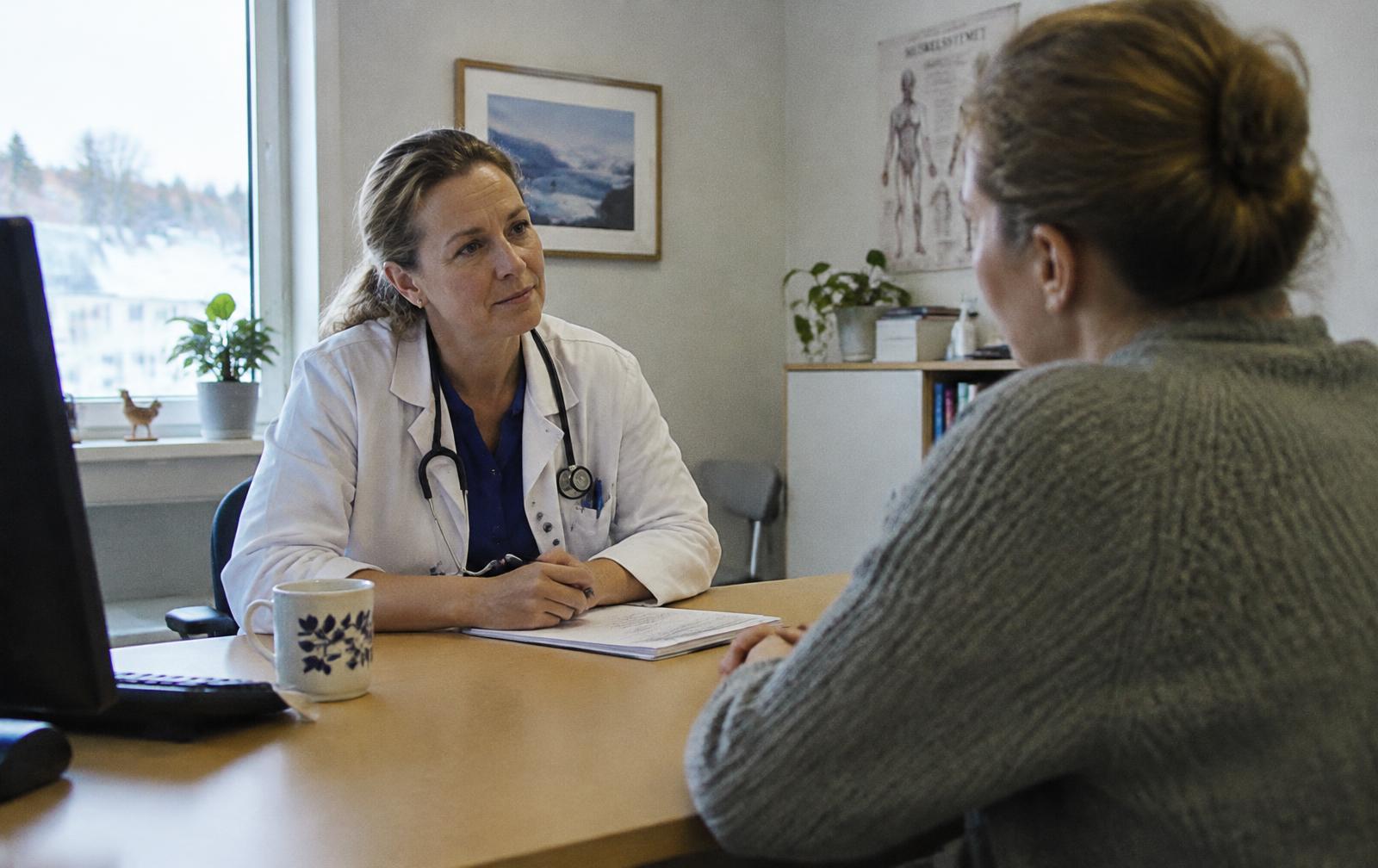
No prescription, but still a doctor: they remain central to the process. Your result is sent to the doctor you selected from our panel, who will explain it during a 30-minute video consultation, included whatever the result.
Are you receiving care for cancer? Speak directly to your oncologist: they can prescribe this test without going through Prevonco.
For any questions about your situation, or if you have symptoms, your doctor remains your first point of contact.
What if my level is high?
A high level tends to be a strong signal. It is not a conclusion: its cause needs to be investigated with a doctor.⁷
Your result is sent to the doctor you selected from our panel. They will explain it during the 30-minute video consultation included in the price. Further investigations prescribed by a doctor can help identify the cause.⁷
What if the level is intermediate? It may not be related to cancer (smoking, an inflammatory condition, etc.). Other blood tests may be suggested; if they are normal, a repeat check is planned at 12 months. You will never be left to face your result alone.⁷
What if my level is low?
That is reassuring, but no test is perfect: a low level does not rule everything out.⁷
If you have no symptoms, no specific follow-up is recommended after a low result. The risk of a false negative varies by cancer type.⁷
Your doctor, who is trained in functional medicine and specialises in prevention, will help you explore any concerns or symptoms during the 30-minute video consultation.⁷
Keep up with your usual screening: respond to invitations for organised screening programmes, and see your doctor if a symptom appears.⁷
How long will it take to get my results?
The laboratory analysis takes 30 days. Your full results are presented by a doctor trained in functional medicine during a 30-minute consultation included in your package.
You choose the date and time slot that suit you for this appointment.
Prevonco is currently available in France only.
An aid to the early detection of 16 cancers
No prescription needed, for people without symptoms. If you have an unexplained symptom, see your doctor first.
Pre-register for free →General information for educational purposes: it does not replace your doctor's advice. An aid to early detection: it does not replace organised screening, imaging tests or your doctor's advice.
Sources
- 1.INCa, Panorama des cancers en France, 2026
- 2.HAS, mélanome cutané : la détection précoce est essentielle, 2018 (updated 2020)
- 3.Liu et al., Archives of Dermatology, 2006 : vitesse de croissance des mélanomes
- 4.INCa (cancer.fr, 2022, 2024 and 07/10/2026); Santé.fr
- 5.NCI SEER, Cancer Stat Facts – Melanoma of the Skin (2016-2022)
- 6.Santé publique France, survie 1989-2018 – mélanome de la peau
- 7.biodena.care